

NAOKI YAMAMOTO
MAR 21
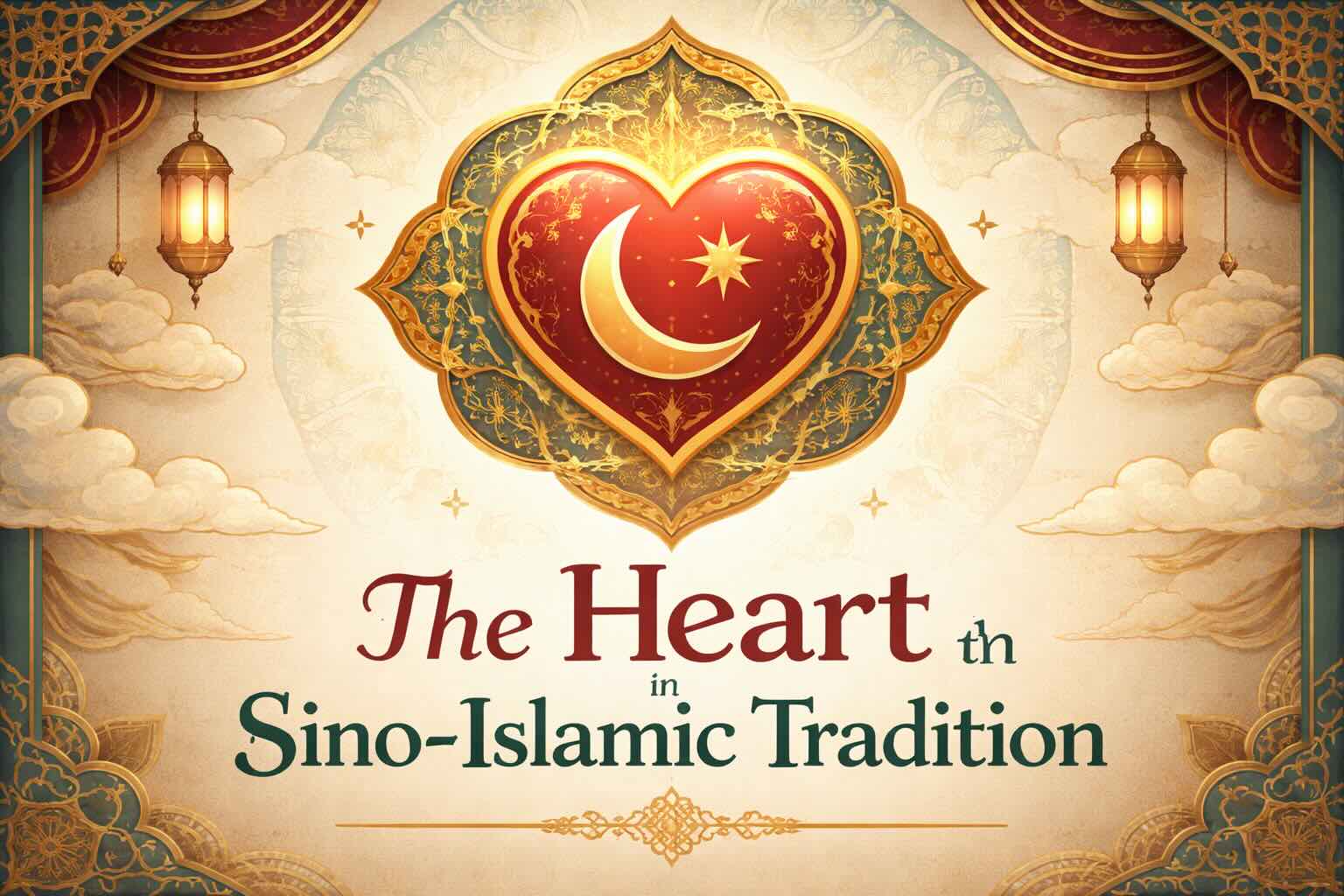
A diagram of the “Heart” (心) from the Han Kitab tradition, a classical Sino-Islamic intellectual heritage. The Arabic word for Allah is written within the Chinese character for “heart” (心).
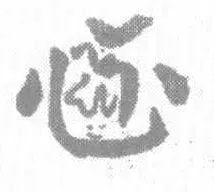
At its core, East Asian thought may be understood as a sustained reflection on the harmony of the Three Powers (三才): Heaven, Earth, and Humanity. Heaven signifies the transcendent, the divine order; Earth, the macrocosmic field in which that order unfolds; and Humanity, the microcosm in which it is received, embodied, and realized. The task of human life, therefore, is not merely to exist within this triadic structure, but to bring it into alignment within oneself.
This alignment is not achieved through abstract speculation alone, but through practice. In the classical vocabulary, it is cultivated through li (ritual propriety), which disciplines the body, refines perception, and ultimately purifies the heart. Through this process, the human being becomes an ethical subject, one whose inner state resonates with the order of Heaven and Earth. This is what is called the Way (Dao): not simply a path to be followed, but a mode of being in which the human stands in right relation to the totality of existence.
Muslim scholars in China inherited this conceptual world and did not reject it; rather, they rearticulated it from within the horizon of Islamic revelation. The harmony of Heaven, Earth, and Humanity came to be understood in light of divine unity (tawḥīd), and the cultivation of the heart was expressed through practices such as remembrance (dhikr). The ethical and cosmological language of the Chinese tradition thus became a vessel through which Islamic metaphysics could be expressed without rupture.
What emerges from this synthesis is neither a simple translation nor a superficial adaptation, but a deeply rooted intellectual tradition: one in which the purification of the heart is at once Confucian self-cultivation and Islamic remembrance, and in which the center of the human being is understood as the locus where the divine order is reflected.
(read Toshihiko Izutsu’s Sufism and Taoism free online)